
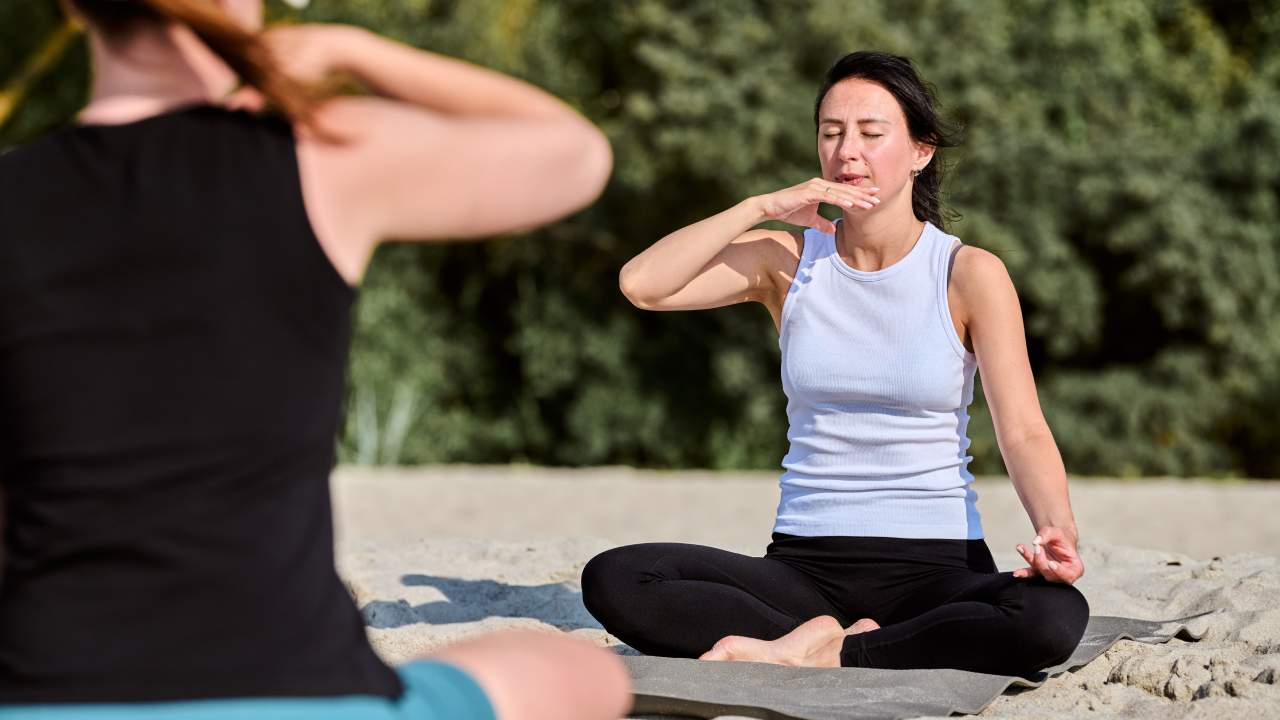
Breathwork for addiction recovery is one of the most underused tools in early sobriety, and the research behind it is far more compelling than most people expect. This article explains what breathwork actually does to an addicted brain, which techniques work for specific situations, and how to build a practice that holds when recovery gets hard.
What Breathwork Actually Does to the Addicted Brain
A 2023 study published in Frontiers in Human Neuroscience, examining over 100 participants practicing structured breathwork, found that controlled breathing directly modulates activity in the prefrontal cortex and amygdala, the two brain regions most disrupted by chronic substance use. That disruption is the core problem: addiction hijacks the brain’s stress-response system, keeping it locked in a state of hyperarousal or flatness, unable to regulate emotion without chemical help.
Breathwork is a deliberate practice, not casual deep breathing. The difference matters. Slowing and controlling the breath through specific ratios and rhythms sends direct signals to the autonomic nervous system through the vagus nerve, shifting the body out of sympathetic overdrive (fight-or-flight) and into parasympathetic recovery (rest-and-digest). No drug required. That is the core claim of this article: breathwork gives the nervous system a non-chemical mechanism to regulate itself, and that mechanism works during the period when the brain is most destabilized.
How Breathwork Eases Cravings and Withdrawal Stress
A 2018 study from Yale University’s School of Medicine followed 60 adults in early recovery from alcohol use disorder through a structured yoga and breathing intervention. Participants who completed the program showed significantly lower cortisol levels and self-reported cravings compared to the control group. The mechanism is straightforward: slow, controlled exhales activate the parasympathetic nervous system, which dials down the fight-or-flight state that drives cravings.
What this means in practice is that a craving is not a command. It is a physiological spike, a surge of cortisol and dopamine signaling that lasts, on average, 15 to 20 minutes before it subsides on its own. Breathwork shortens that window by interrupting the stress cascade before it peaks. The next time a craving hits, start a breathing technique before doing anything else. The technique matters less than the act of using one immediately.
Box Breathing for Acute Craving Moments
Box breathing follows a simple four-part structure: inhale for four counts, hold for four counts, exhale for four counts, hold for four counts. Repeat the cycle four times. The U.S. Navy SEALs adopted this protocol specifically for high-stress situations where cognitive function needed to remain online under physiological pressure, and subsequent research on first responders confirmed its effectiveness at reducing acute sympathetic activation.
The reason it works is structural. Counting to four on each phase occupies the prefrontal cortex, the region responsible for decision-making that addiction progressively erodes. Keeping that region engaged during a craving episode interrupts the automatic behavioral loop that would otherwise take over. Do one complete round right now so the rhythm is familiar before you need it in a moment of crisis.
The 4-7-8 Technique for Sleep and Anxiety
Extended-exhale breathing is among the most replicated findings in autonomic research. A 2015 review in Autonomic Neuroscience confirmed that exhales longer than inhales consistently activate the parasympathetic nervous system, lowering heart rate and cortisol simultaneously. The 4-7-8 technique applies this directly: inhale for four counts, hold for seven, exhale slowly for eight. The long exhale is the active ingredient.
Sleep disruption and anxiety are two of the most common and most dangerous withdrawal symptoms, particularly during the first two weeks of early recovery from alcohol, benzodiazepines, and opioids. Use this technique at bedtime during that window. Two cycles are enough for most people to notice a measurable shift in heart rate.
Diaphragmatic Breathing as a Daily Reset
Chest breathing, the shallow pattern most people default to under stress, keeps the body in a low-grade sympathetic state. A 2017 study in Frontiers in Psychology, conducted with 40 adults, found that switching to diaphragmatic breathing over eight weeks produced significant reductions in cortisol and negative affect compared to controls.
The technique is simple. Place one hand on the chest and one on the belly. Breathe so that only the lower hand rises. That means the diaphragm is doing the work, not the accessory muscles of the upper chest. Practice for five minutes each morning. It feels mechanical at first. That is normal.
Breathwork’s Role in Treating Co-Occurring Mental Health Conditions
A 2020 meta-analysis published in Journal of Clinical Psychology, reviewing 15 controlled trials with a combined sample of over 2,300 participants, found that breathwork-based interventions produced significant reductions in symptoms of anxiety, depression, and PTSD. These three conditions co-occur with substance use disorder at rates above 50 percent, and they share the same underlying mechanism: a dysregulated autonomic nervous system.
Treating addiction without addressing that dysregulation is one of the primary drivers of relapse. The nervous system remains reactive long after detox ends, and that reactivity creates the conditions where substances become appealing again. This is where pairing breathwork with mind-body focused addiction treatment makes practical sense. Breathwork is a self-administered, drug-free tool that works between therapy sessions, not as a replacement for clinical care but as a daily maintenance layer that keeps the window of tolerance open.
How to Build a Breathwork Practice That Holds in Recovery
A 2010 study from University College London, analyzing habit formation across 96 participants over 12 weeks, found that daily repetition in the same context produced automaticity roughly twice as fast as intermittent practice, regardless of session length. Five minutes every morning outperforms a 45-minute session twice a week because frequency is what rewires the nervous system, not intensity.
The most common reason people abandon breathwork early in recovery is that it feels too simple. The body expects relief to cost something, especially after years of relying on substances that produced an immediate and unmistakable effect. The mechanism that disproves that skepticism is neurological: consistent vagal stimulation through breathing literally increases vagal tone over time, making the parasympathetic response faster and more accessible. The simplicity is the point.
Anchor the practice to one existing daily habit, morning coffee, brushing teeth, or the first minute after waking. No additional decision-making required. Recovery already demands enormous cognitive bandwidth. This practice should not add to that load. If breathwork resonates as part of a broader approach to physical and emotional healing, it fits naturally alongside yoga, meditation, and fitness work as part of a structured daily routine rather than a standalone experiment.
What to Try This Week
Pick box breathing. Set a five-minute timer tomorrow morning and complete the four-count cycle before checking your phone. That is the whole instruction.
Recovery tools compound. What feels mechanical in week one becomes automatic by week four, and by week eight the nervous system responds faster, cravings feel shorter, and sleep starts to stabilize. Breathwork does not produce those results alone. It works best as one component within a structured program that includes medical oversight, therapeutic support, and physical recovery, things like yoga and movement-based practices, fitness coaching, and nutrition. If you are evaluating what that kind of program looks like in practice, what a wellness-based approach to treatment actually includes is worth understanding before making any decisions. Start with the five-minute timer. Build from there.