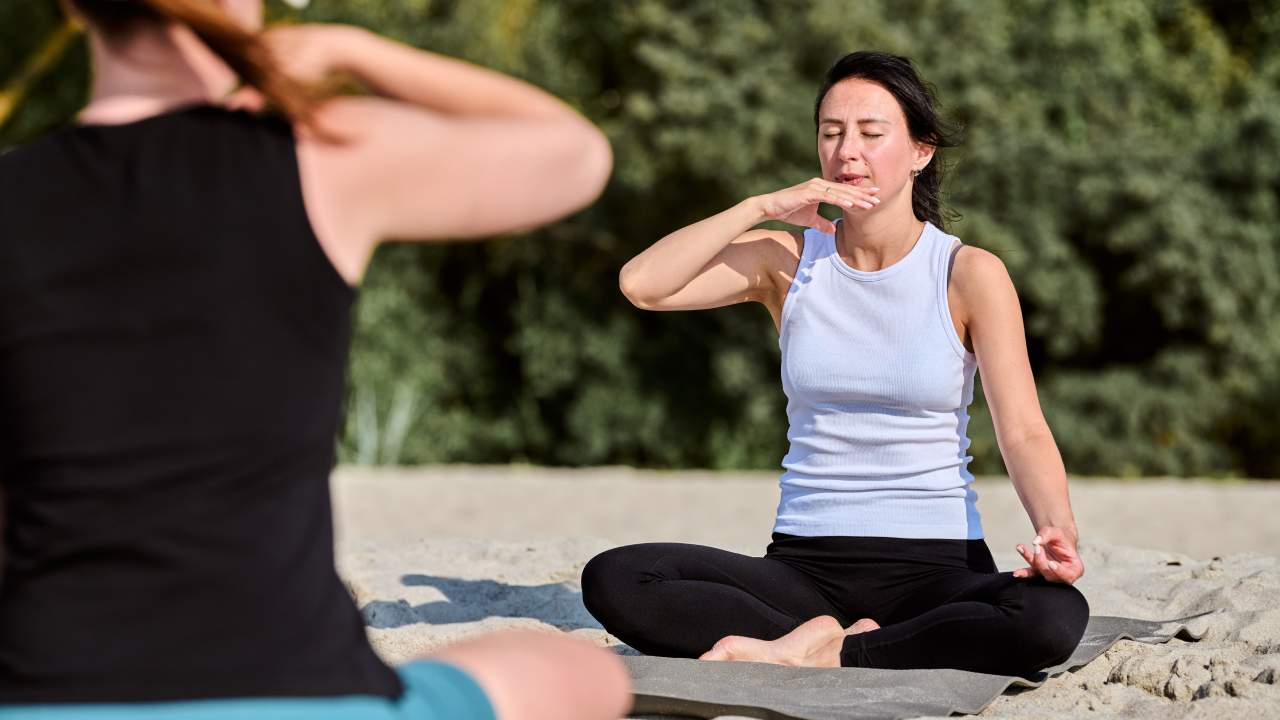
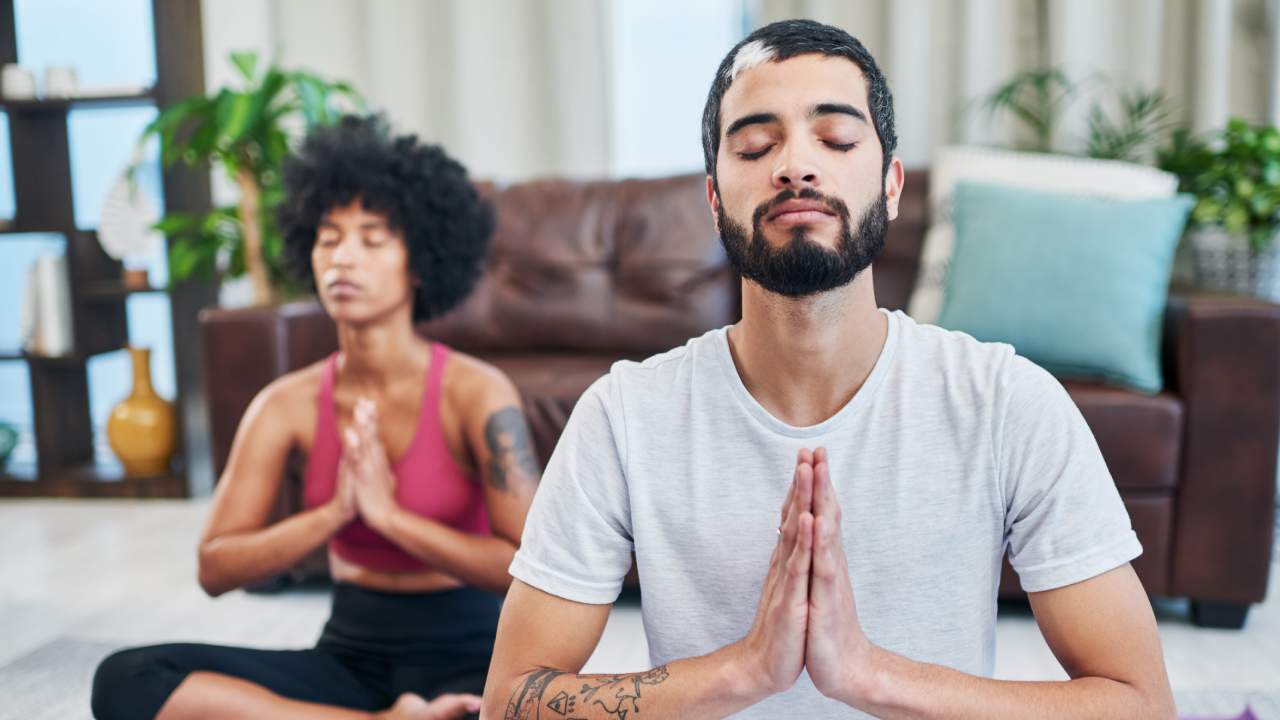
Yoga and meditation in recovery aren’t wellness extras bolted onto a treatment program. They are evidence-based tools that work on the same neural and physiological systems that addiction disrupts, and the research behind them is specific enough to act on.
What Yoga and Meditation Actually Do in Recovery
A 2020 review published in the Journal of Substance Abuse Treatment, analyzing data from over 3,000 participants across 19 randomized controlled trials, found that mind-body interventions reduced substance craving by a statistically significant margin compared to standard care alone. That number matters because craving, not lack of willpower, is what drives most relapse.
Addiction rewires the brain’s reward and stress-regulation systems. Substances flood the brain with dopamine at levels no natural experience can replicate, and over time the brain recalibrates: it stops producing adequate dopamine on its own, raises the threshold for pleasure, and locks the stress response in a state of chronic activation. When the substance disappears, the nervous system doesn’t simply reset. It enters a deficit state, marked by anxiety, dysphoria, poor impulse control, and hypersensitivity to stress.
Yoga and meditation address this directly. Not by mimicking the chemical effect of substances, but by working on the same underlying neural circuits through movement, breath, and attention. Both practices activate the parasympathetic nervous system, reduce cortisol, and rebuild prefrontal cortex function. The result, over weeks and months of consistent practice, is a nervous system that can tolerate discomfort without reaching for a chemical solution. That is the core mechanism, and everything else flows from it.
The Science Behind the Mind-Body Connection
Bessel van der Kolk’s research, detailed in his landmark work and supported by a decade of clinical trials at the Trauma Center in Boston, established something that addiction treatment has been slow to incorporate: trauma and chronic stress are stored somatically, in the body’s tissues and nervous system, not just in memory and cognition. His 2014 randomized controlled trial with 64 women who had treatment-resistant PTSD found that yoga produced significant reductions in PTSD symptoms compared to a control group receiving standard care. The mechanism wasn’t insight or narrative. It was direct regulation of the body’s autonomic state.
This matters for addiction recovery because most people entering treatment carry unresolved trauma. The two conditions feed each other, and standard talk therapy, while valuable, operates primarily through the cortex. It processes the story of what happened. But the body’s alarm system, the part that fires cravings and panic responses, sits deeper than language. Somatic practices like yoga reach the brainstem and limbic system through sensation and movement, accessing neural pathways that a 50-minute session of cognitive processing often doesn’t touch.
What this means in practice: if your cravings feel physical, like a tightening in the chest or a restlessness you can’t reason your way out of, that is your nervous system speaking. Yoga and breathwork are designed to answer that language directly. Understanding how mind-body practices work together in treatment gives you a clearer picture of why this approach is now standard in serious clinical programs.
How Yoga Changes the Addicted Brain
A 2018 neuroimaging study from Harvard Medical School, conducted with 34 adults in long-term recovery using yoga as a regular practice, found measurable increases in gray matter volume in the prefrontal cortex and insula compared to controls. These are precisely the regions that substance use degrades. The prefrontal cortex governs impulse control, decision-making, and emotional regulation. The insula mediates interoception, your ability to feel and interpret internal body signals. Both are compromised in active addiction, and both respond to sustained yoga practice.
The practical translation: yoga rebuilds the brain’s ability to tolerate discomfort without acting on it. A posture held past the point of comfort is a training repetition for delayed gratification. Savasana, the final resting pose practiced deliberately, trains the nervous system to settle. Neither of these outcomes comes from stretching alone. They come from the conscious attention yoga requires, directing the brain’s executive function toward the present moment rather than toward relief-seeking.
Stress Hormones and the Nervous System Reset
A 2017 study published in Complementary Therapies in Medicine, following 38 adults in residential treatment for alcohol use disorder, found that an eight-week yoga program produced significant reductions in salivary cortisol compared to a control group. Cortisol is the body’s primary stress hormone, and in people recovering from chronic alcohol or opioid use, the HPA (hypothalamic-pituitary-adrenal) axis is dysregulated for months after last use. The system runs hot: it over-responds to stressors that a healthy nervous system handles with minimal activation.
Yoga counteracts this through parasympathetic activation, measurable as improvements in heart rate variability, which is one of the clearest physiological markers of nervous system flexibility. Box breathing, a technique involving a four-count inhale, four-count hold, four-count exhale, and four-count hold, directly stimulates the vagus nerve and shifts the body out of fight-or-flight within minutes. It requires no equipment, no mat, and no prior experience. This is the one technique worth learning in the first week of recovery.
Dopamine, Craving, and the Reward Pathway
A 2021 study from the National Institute on Drug Abuse, examining neurochemical changes in 42 adults practicing yoga three times per week for twelve weeks, found significant increases in GABA and dopamine compared to a walking group. These are the same neurotransmitters depleted by chronic substance use, and yoga produces them through a completely different mechanism: movement, mastery, breath synchronization, and the physiological release of completing a practice.
Cravings feel urgent because the brain has been rewired to classify the substance as a survival need, placing it in the same priority queue as food and water. During a high-craving moment, the dopamine deficit is real. A 20-minute yoga session won’t replicate the dopamine spike of an opioid, but it produces a measurable, drug-free rise in reward neurochemistry. Over time, that retraining shifts the brain back toward natural reward sensitivity. The practical application: when a craving spikes, movement is the most direct biological intervention available.
The Specific Benefits of Yoga in Addiction Recovery
Yoga produces measurable change across four domains that map directly onto the challenges of early and sustained recovery.
Stress Management and Relapse Prevention
A 2014 study published in Drug and Alcohol Dependence, following 286 adults in outpatient treatment over 12 months, found that perceived stress was the strongest predictor of relapse, outranking craving intensity, social pressure, and mental health symptoms. Stress is not just an uncomfortable feeling during recovery. It is the most common physiological trigger for return to use.
Yoga addresses both the subjective experience of stress and its biological markers simultaneously, which is something that most behavioral interventions don’t achieve. Restorative yoga, which involves supported, passive holds using props and minimal muscular effort, is the most effective style for acute stress. It directly activates the parasympathetic nervous system through sustained stillness, and a single 30-minute restorative session produces measurable reductions in cortisol. For someone in early recovery dealing with hyperactivation, this style is more appropriate than a vigorous flow class.
Improved Sleep and Physical Restoration
A 2020 study in the Journal of Evidence-Based Integrative Medicine, examining 40 adults in recovery from opioid use disorder, found that a twice-weekly yoga program significantly improved sleep quality scores after six weeks, compared to a control group. Post-acute withdrawal syndrome (PAWS), which follows medically managed detox from alcohol, benzodiazepines, and opioids, consistently includes insomnia as one of its most persistent and disruptive symptoms. Poor sleep increases cortisol, impairs prefrontal function, and amplifies craving intensity, creating a cycle that undermines everything else in treatment.
Legs-up-the-wall, a restorative inversion requiring nothing but a flat surface, signals the nervous system to downshift within minutes. Practiced for 10 to 15 minutes before sleep, it reduces activation and supports sleep onset without medication. For anyone dealing with sleep disruption in early recovery, this is a concrete, accessible starting point.
Emotional Regulation and Mood Stability
A 2016 study from Brown University, examining 36 veterans with co-occurring PTSD and substance use disorder, found that an eight-week trauma-sensitive yoga program produced significant reductions in PTSD symptom severity and depression scores. Mood dysregulation sits at the center of addiction: negative emotional states drive substance use as self-medication, and the neurochemical disruption of addiction amplifies emotional volatility. Both processes compound each other.
Yoga addresses this by rebuilding interoceptive awareness, the ability to notice and name what is happening inside the body before it reaches crisis intensity. When emotional states become legible at a lower level of activation, there is more time and more cognitive capacity to respond rather than react. A body scan practice, moving systematic attention from feet to crown while lying still, trains exactly this skill. Five minutes of body scanning when emotional intensity begins to rise is enough to interrupt the escalation pattern.
Building a Healthier Body After Substance Use
A 2019 clinical review in Alcohol and Alcoholism summarized the physical toll of chronic substance use in measurable terms: alcohol causes liver inflammation and nutritional depletion across B vitamins, magnesium, and zinc; opioid use leads to hormonal suppression, muscle wasting, and compromised immune function; stimulants including cocaine and methamphetamine produce cardiovascular stress, significant weight loss, and disrupted sleep architecture. The body entering recovery is not simply chemically dependent. It is structurally depleted.
Yoga addresses multiple physical recovery needs at once: rebuilding muscular strength and proprioception, improving circulation, reducing systemic inflammation, and supporting liver detoxification through twisting postures that compress and release abdominal organs. Gentle or restorative yoga is the right entry point, not power vinyasa or hot yoga. The goal in the first weeks is restoration, not performance. Pairing this with structured nutritional support during treatment gives the body the raw materials it needs to rebuild alongside the structural work yoga initiates.
How Meditation Supports Long-Term Sobriety
Yoga and meditation share overlapping mechanisms, but they address different dimensions of recovery. Yoga is movement-based and primarily somatic. Meditation is attention-based, training the relationship between a thought or sensation and the action it prompts. That gap, the moment between craving and behavior, is precisely where recovery happens, and meditation is designed to widen it.
Mindfulness-Based Relapse Prevention (MBRP)
The most rigorously tested meditation protocol in addiction recovery is Mindfulness-Based Relapse Prevention, developed by Alan Marlatt and Sarah Bowen at the University of Washington. A 2014 randomized controlled trial by Bowen and colleagues, following 286 adults across three treatment conditions over 12 months, found that participants in MBRP had significantly lower rates of substance use at follow-up compared to those in standard aftercare and cognitive-behavioral relapse prevention. The effect was strongest for reducing heavy drinking days and drug use days.
MBRP works by training participants to observe craving as a wave: a sensation that rises, peaks, and passes without requiring action. An eight-week structured program, sessions typically run 2 hours each, teaches participants to surface automatic patterns of reactivity and recognize them before they translate into behavior. Outside a clinical setting, the MBRP Workbook by Bowen, Chawla, and Marlatt provides the core practices in a self-guided format. The formal program is accessible through many outpatient providers and is increasingly integrated into residential treatment.
Meditation and Co-Occurring Mental Health Conditions
A 2015 meta-analysis published in JAMA Internal Medicine, analyzing 47 randomized controlled trials with 3,515 participants, found that mindfulness meditation produced moderate reductions in anxiety, depression, and pain, with effect sizes comparable to antidepressant medications for certain conditions. In addiction populations, where co-occurring depression, anxiety, and PTSD drive the majority of relapse events, this is not a peripheral finding.
The key distinction: meditation doesn’t suppress emotion or produce the emotional blunting associated with some psychiatric medications. It changes the relationship to internal states, reducing reactivity without numbing. For someone with trauma history, a breath-focused sit of 10 minutes, eyes open, attention resting on the physical sensation of breathing rather than on narrative content, is a safe and accessible starting point. Attention to the body, rather than to memory or interpretation, keeps the practice grounded without requiring a difficult journey into traumatic content.
Common Forms of Yoga Used in Recovery Settings
The yoga used in clinical recovery settings is distinct from what most people encounter in a gym or studio. Restorative yoga uses props, blankets, and bolsters to support the body in passive holds that trigger the relaxation response. Yin yoga involves floor-based postures held for three to five minutes, targeting connective tissue and producing a deep settling effect in the nervous system. Gentle hatha yoga combines slow movement with breath awareness and is the most common introductory format in residential programs.
Trauma-informed yoga, developed specifically for populations with trauma histories, differs from all of the above in its structure rather than its poses. Practitioners of this approach, trained through the Trauma Center Trauma-Sensitive Yoga (TCTSY) certification developed by David Emerson and Bessel van der Kolk’s team in Boston, emphasize choice, autonomy, and non-judgment in every aspect of delivery. Instructors offer options rather than directives, use invitational language, and never physically adjust participants without explicit consent. For someone whose sense of bodily autonomy has been compromised, this structure is not a preference but a clinical requirement. Many programs offering evidence-based holistic treatment approaches now require TCTSY certification for their yoga staff.
What to Expect When You Start
The most common barrier to beginning yoga or meditation in recovery isn’t physical. It’s the belief that it’s not for you: that you need to be flexible, spiritual, calm, or experienced to participate. None of that is true, and good recovery programs are built around exactly this reality.
A first yoga session in a recovery setting starts on the floor or in a chair. There are no performance expectations, no competitive atmosphere, and no complex sequences to memorize. Props are standard. Instructors in this setting are trained to work with physical limitations, medication side effects, and emotional volatility. The pace is slow, the environment is low-pressure, and you are encouraged to modify or rest at any point.
For meditation, the entry point is simpler still. A 2018 study from Oxford University, examining 1,247 adults new to meditation, found that eight sessions of just 10 minutes each produced measurable reductions in anxiety and fatigue. You don’t sit cross-legged on a cushion. You sit in a chair with feet on the floor, set a timer for 10 minutes, and direct attention to the physical sensation of breathing. When the mind wanders, which it will, you return attention to breath. That’s the entire practice in early stages.
No equipment is required. Comfortable clothing is enough. The Insight Timer app offers free guided meditations and yoga nidra sessions specifically curated for recovery. The most accessible breathwork practice for those in early recovery is as close as a quiet room and five minutes. These practices become more effective with consistency, not with intensity.
Starting Where You Are
A 2019 study from UCLA’s Mindful Awareness Research Center, following 52 adults in outpatient substance use treatment, found that participants who practiced mindfulness or yoga at least three times per week for eight weeks showed significantly greater reductions in craving and anxiety compared to those practicing less than twice weekly. Three sessions per week, each between 20 and 60 minutes, is the dose at which research consistently shows clinically meaningful change in stress, mood, and craving. Consistency matters more than session length, particularly in the first 90 days.
The simplest entry point: tonight, before sleep, spend 10 minutes in legs-up-the-wall. That’s it. No commitment beyond that one practice. Programs that take recovery seriously, pairing this kind of physical and somatic work with medical care and structured therapy, build these practices into the daily rhythm rather than leaving them as optional extras. If you’re evaluating programs, what to look for in a facility that integrates body-based recovery includes exactly this kind of intentional, clinically grounded structure. The body under strain during early recovery needs more than clinical management. It needs practices designed to restore what substance use takes away.